
At Midgard, sustainable travel in Iceland is not treated as a separate initiative or a temporary campaign. It has always been one of the core values shaping how things are done. Decorations made from items collected along the beach. Lunchboxes designed to reduce waste during tours. Decisions made on the road, in the field and at Midgard Base Camp that aim to work with the environment rather than against it.
In April 2025, we made this commitment more visible.
Not by introducing entirely new systems, but by deliberately focusing on what sustainability looks like in practice. This wasn’t the first time we approached it this way. Over the past years, we have revisited this format multiple times, each with a slightly different focus, and it has become an ongoing part of how we work.
Throughout the month, sustainability took shape through a series of activities, collaborations, and small-scale experiments. Some were structured, others more spontaneous, but all were grounded in the same idea: responsibility is not abstract, it’s something you actively engage with. We will continue this approach in May, building on what we’ve learned and refining it further.
Working with the Landscape
The month began outdoors, in a very direct way. During Plokkdagur in Hvolsvöllur, small teams spread out across roadsides and open fields. Areas that appear clean at first glance quickly revealed a different layer. Plastic caught in bushes, leftover decorations from previous seasons, packaging that had settled into the ground over time.
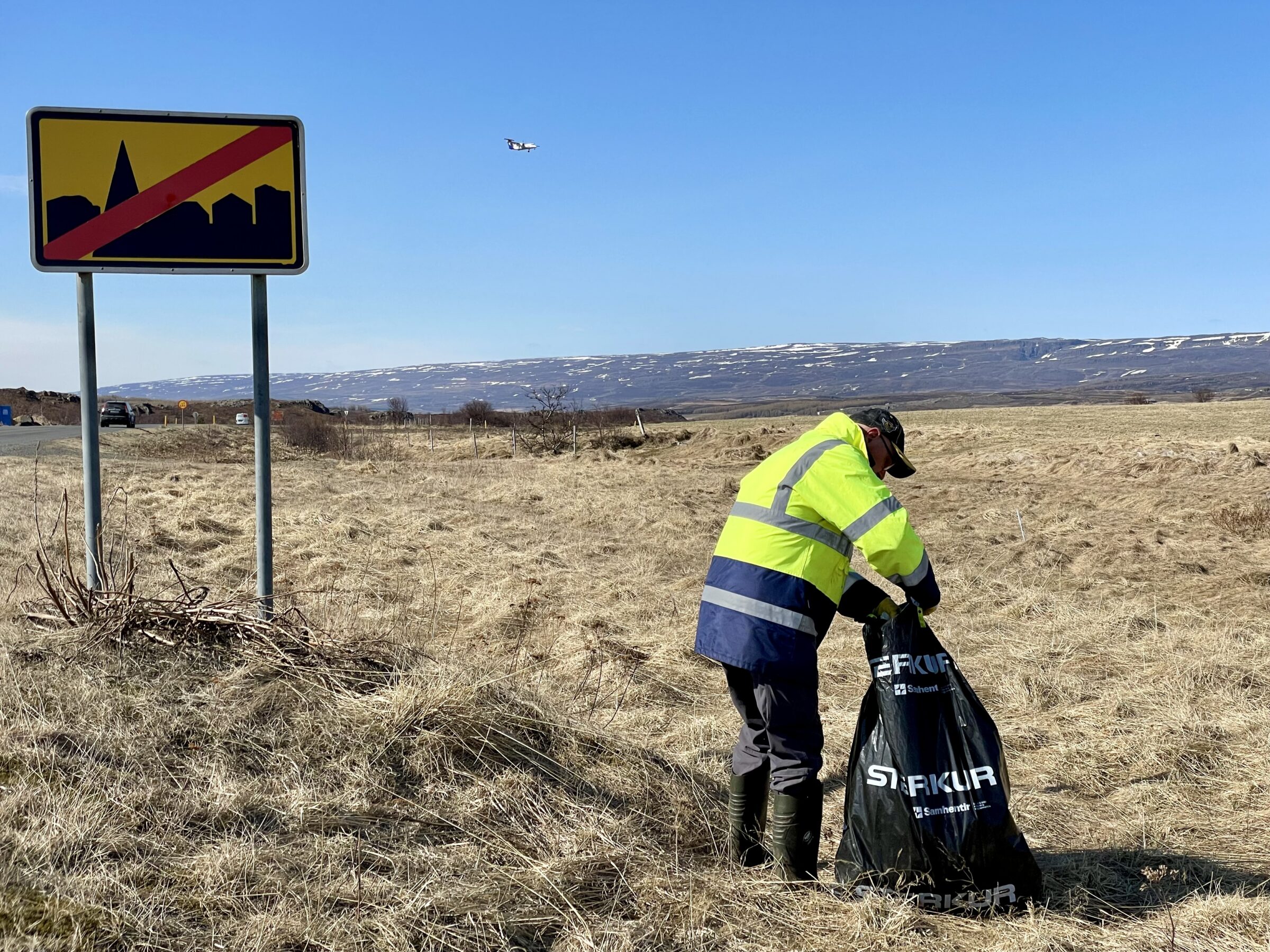
The work itself was simple and repetitive. Walking, picking up, moving on. But it changed how people looked at their surroundings. What usually blends into the background suddenly became visible. It also did not take long before the activity became something shared. People teamed up, compared findings, turned it into small, informal competitions. At one point, a child from the neighbourhood joined in, communication reduced to gestures and shared intention. It was enough to work together.
The following day, the scale shifted significantly. Together with the Blue Army, the focus moved to the black sand beaches near Landeyahöfn. Here, the impact was more immediate and more physical. Heavy fishing ropes buried deep in the sand, tangled nets, plastic containers, even canisters with chemical residues.
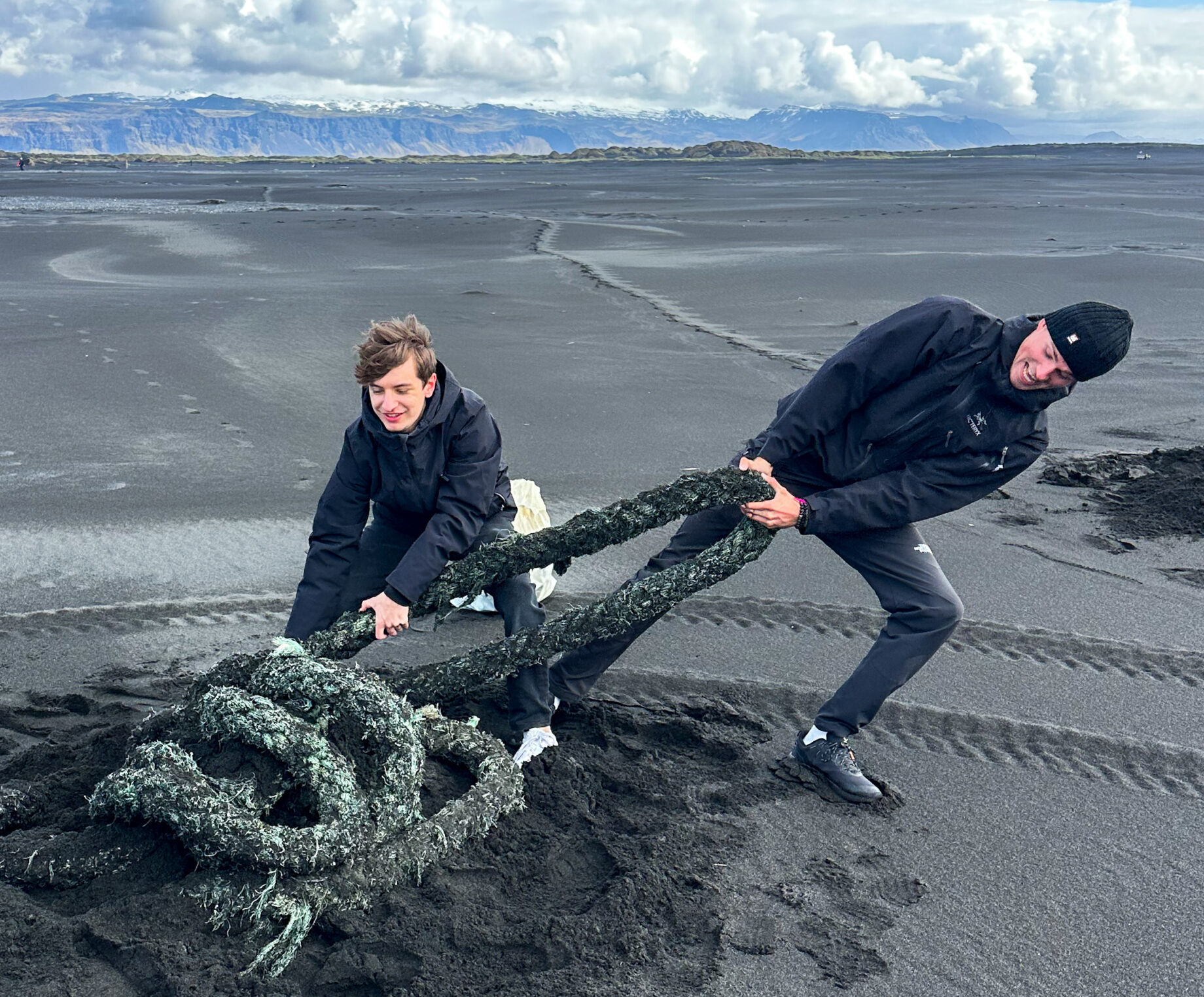
Removing the waste took time and effort. Digging, pulling, carrying. It was not just about collecting what had washed ashore, but about understanding how it accumulates over time and how difficult it becomes to remove once it settles into the landscape.
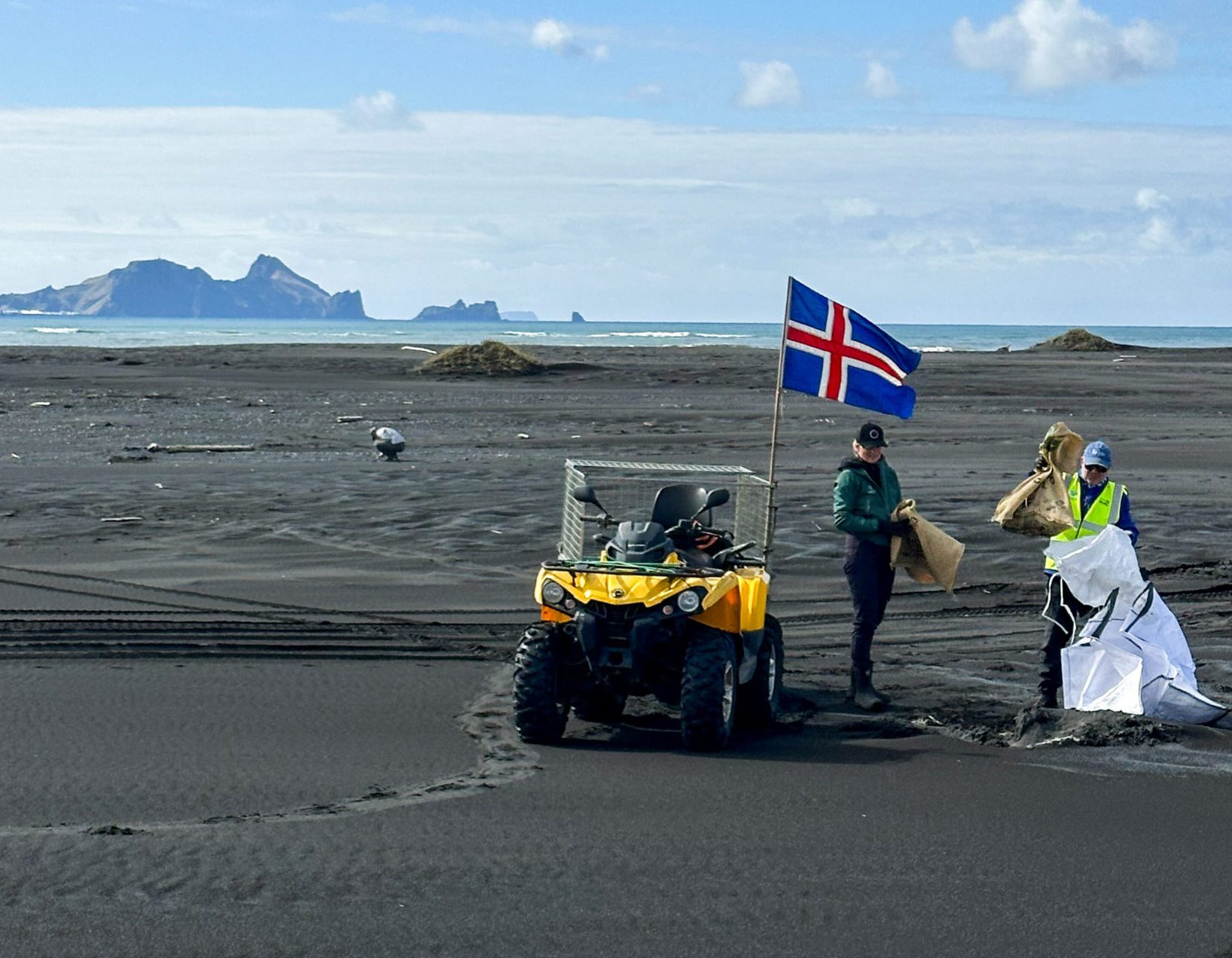
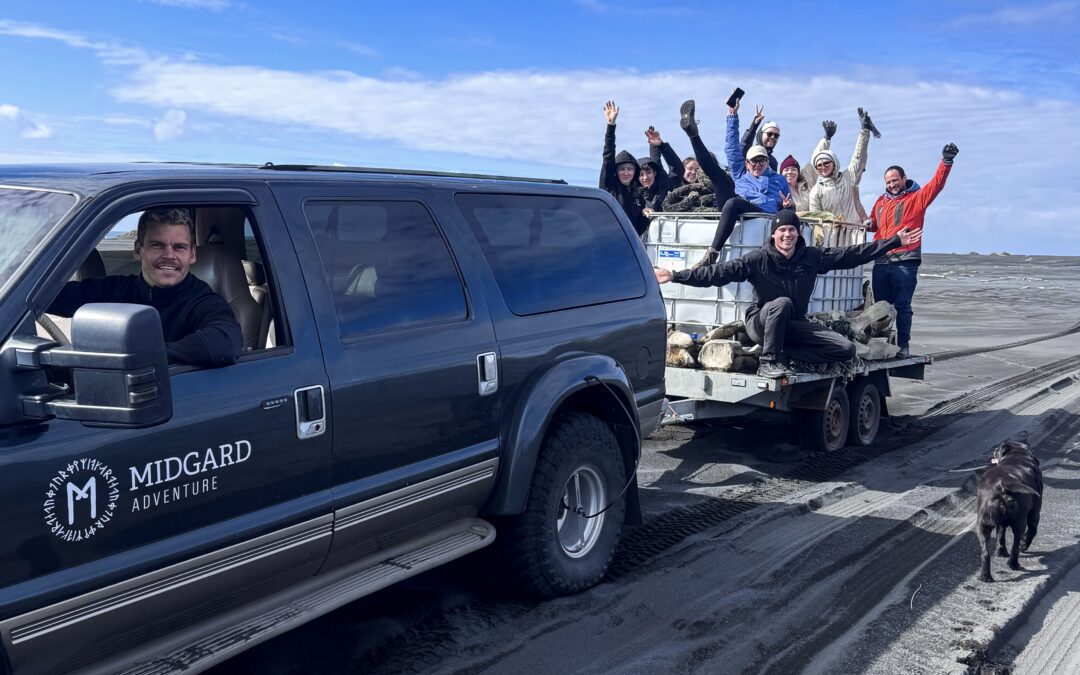
At the same time, the day was not defined by the work alone. There were pauses, shared meals, and conversations between guests and staff. Small moments that created a different kind of connection to the place and to each other. At one point, everyone climbed onto a trailer and was driven along the beach, with dogs running alongside. Moments like these might seem secondary, but they shape how the day is experienced and remembered.
Extending Lifecycles
Back at Midgard Base Camp, sustainability became less physical, but no less relevant. A clothing rack appeared in the shop, filled with used outdoor gear. Jackets, fleeces, hiking trousers. Functional, worn, but still replaced, these items were given a second life. Guests could browse, buy, borrow, or exchange. A simple system, but one that shifts
perspective. Gear is no longer something you use once and move on from. It becomes part of a cycle, moving between people and experiences. A similar approach shaped the microgreens workshop.
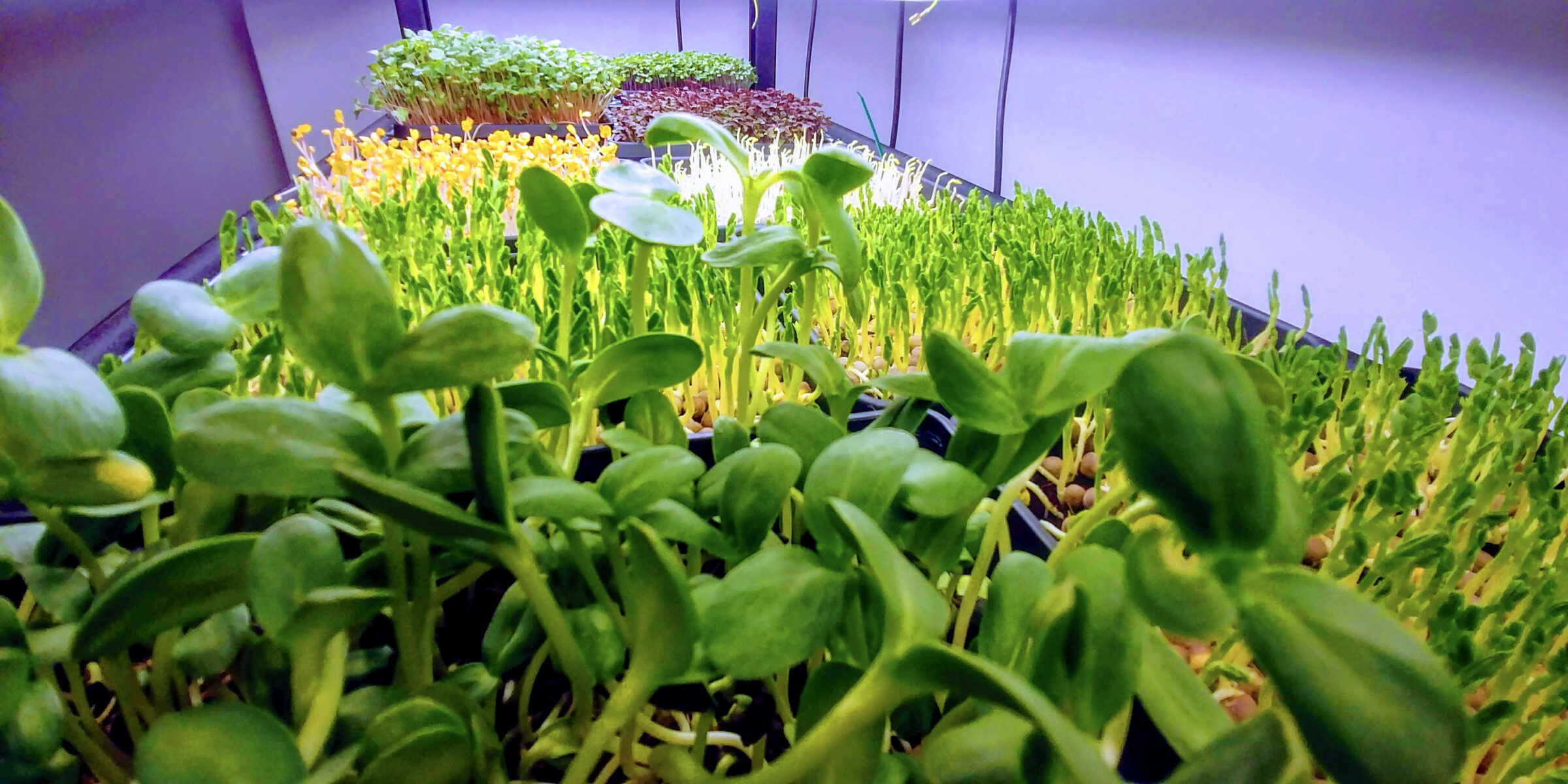
Under guidance of Shaun, who normally represents our Marketing Team, trays were filled with soil, seed carefully planted and labeled. The process was straightforward, the intention clear. Growing something small, locally, with minimal resources. Did you know that microgreens can contain significantly higher concentration of vitamins and nutrients than their fully crown counterparts? Small in size but surprisingly powerful. At Midgard, the idea goes a step further. Growing ingredients on-site creates a direct connection between what is produced and what end up on the plate. Once ready, the microgreens can be incorporated into dishes at the Midgard Restaurant, adding both flavour and another locally grown element to the menu.
Movement and Awareness
Some parts of the month focused less on direct environmental impact and more on
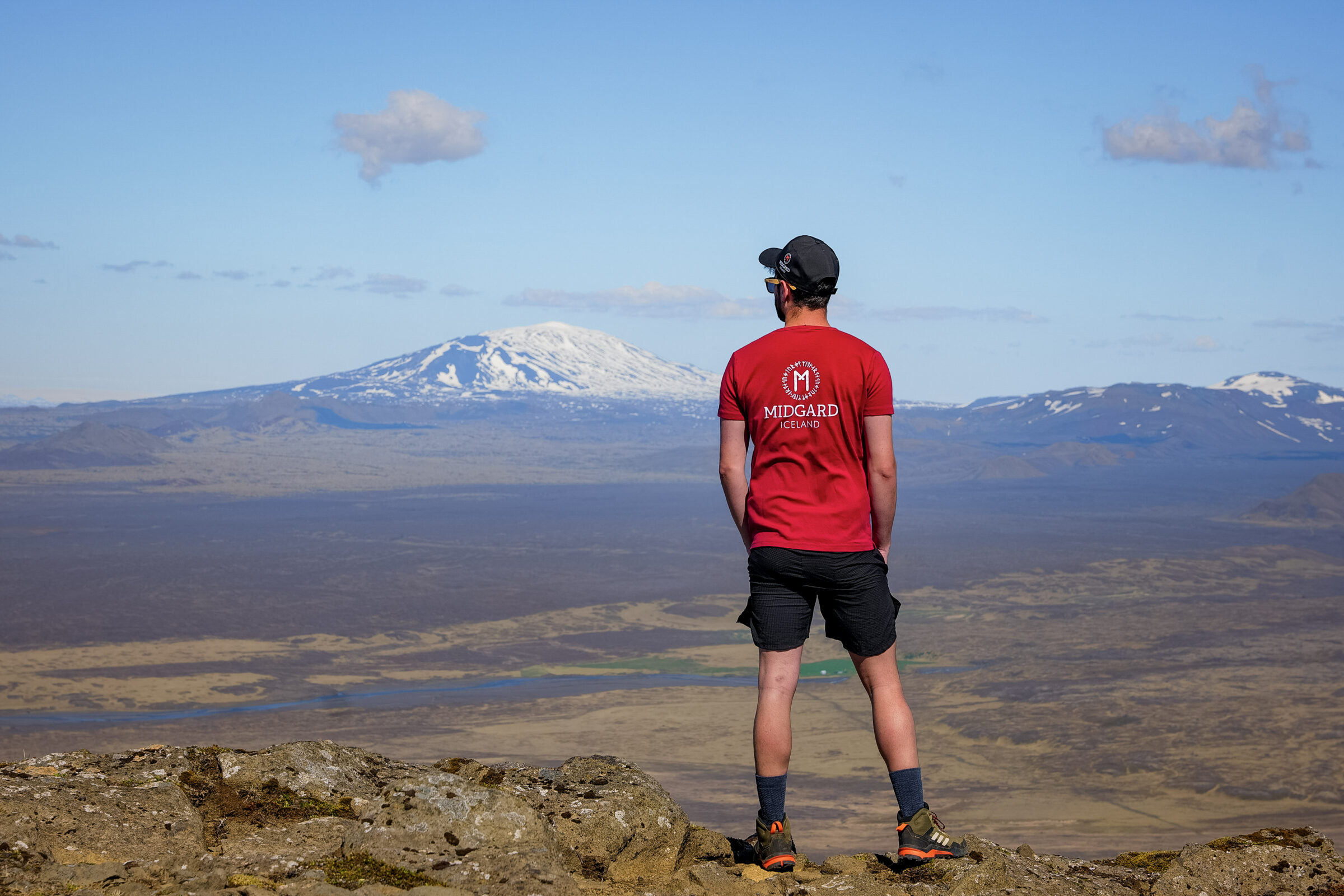
engagement. The mountain game encouraged people to head outside. Not with strict goals, but with a simple invitation: move through the landscape, then return and share the experience. Names were added to a box, turning each hike into a small entry point for something larger. The landscape became something actively explored, not just observed.
Inside Midgard Base Camp, the perspective shifted again. During an art night, sustainability became something to interpret. Participants worked with natural forms, adding their own words and ideas. The results varied. Some direct, others
abstract. Together, they formed a collection of perspectives rather than a single message.
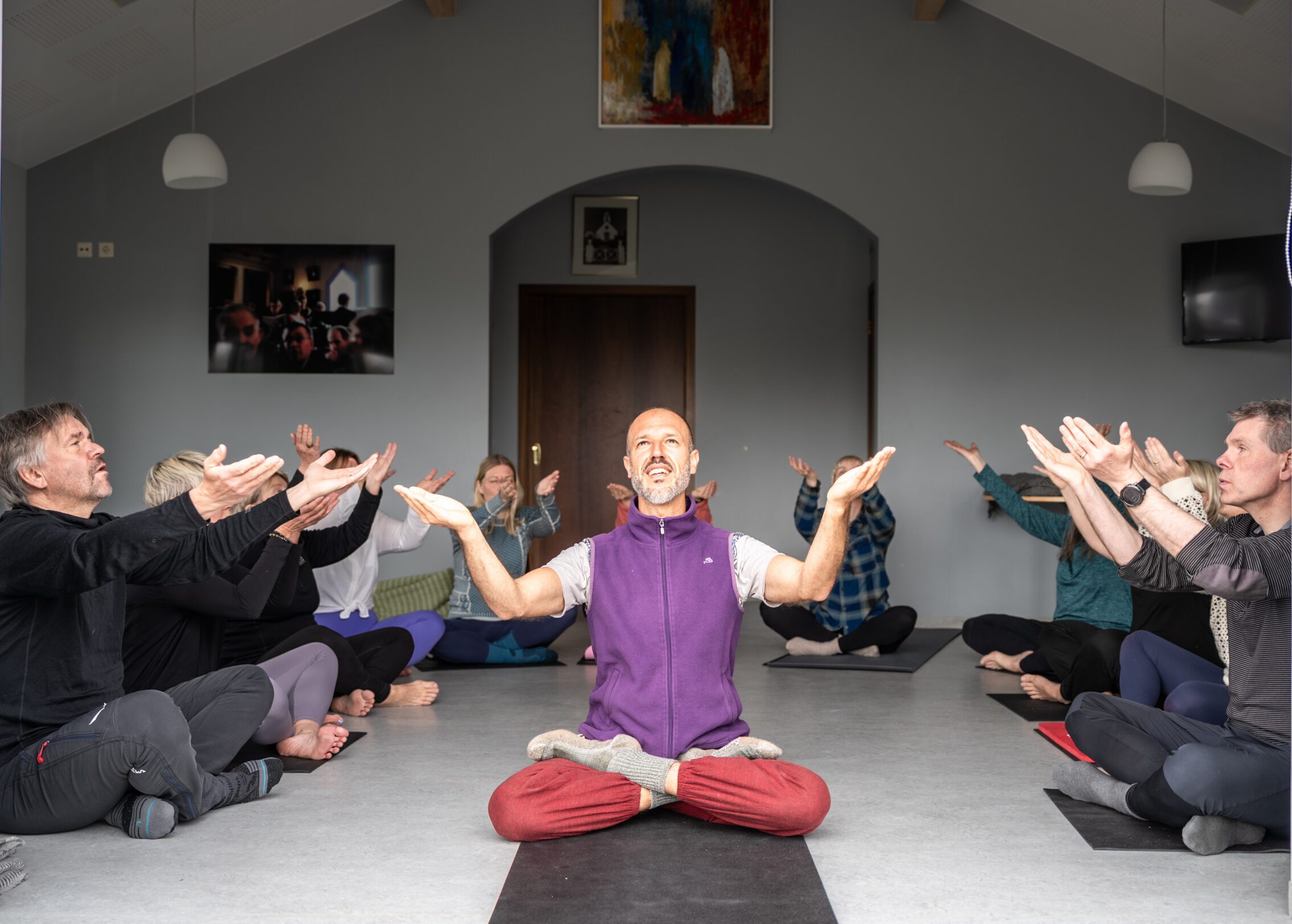
Over one weekend, the focus moved even further inward. Ricardo and Anahat from the Inner Truth academy in Tenerife hosted a yoga retreat at Midgard Base Camp. Through movement, breathwork, and reflection, the emphasis was placed on balance and awareness. Sustainability here was not about the environment directly, but about the individual. Taking care of body and mind, and understanding that this, too, is part of a sustainable way of living.
Reforestation: A Long-Term Perspective
At a reforestation site between Hella and Hvolsvöllur, small birch saplings were planted one by one, gradually covering more of the area. Before getting started, we were introduced to the project by a representative from Land og Skógar, who shared some context about reforestation in Iceland and the long-term efforts to restore native vegetation.
He explained how birch trees once covered large parts of the country and are now being reintroduced step by step. Efforts like these highlight how sustainable travel in Iceland can go beyond observation, allowing visitors and locals to actively contribute to the landscape.
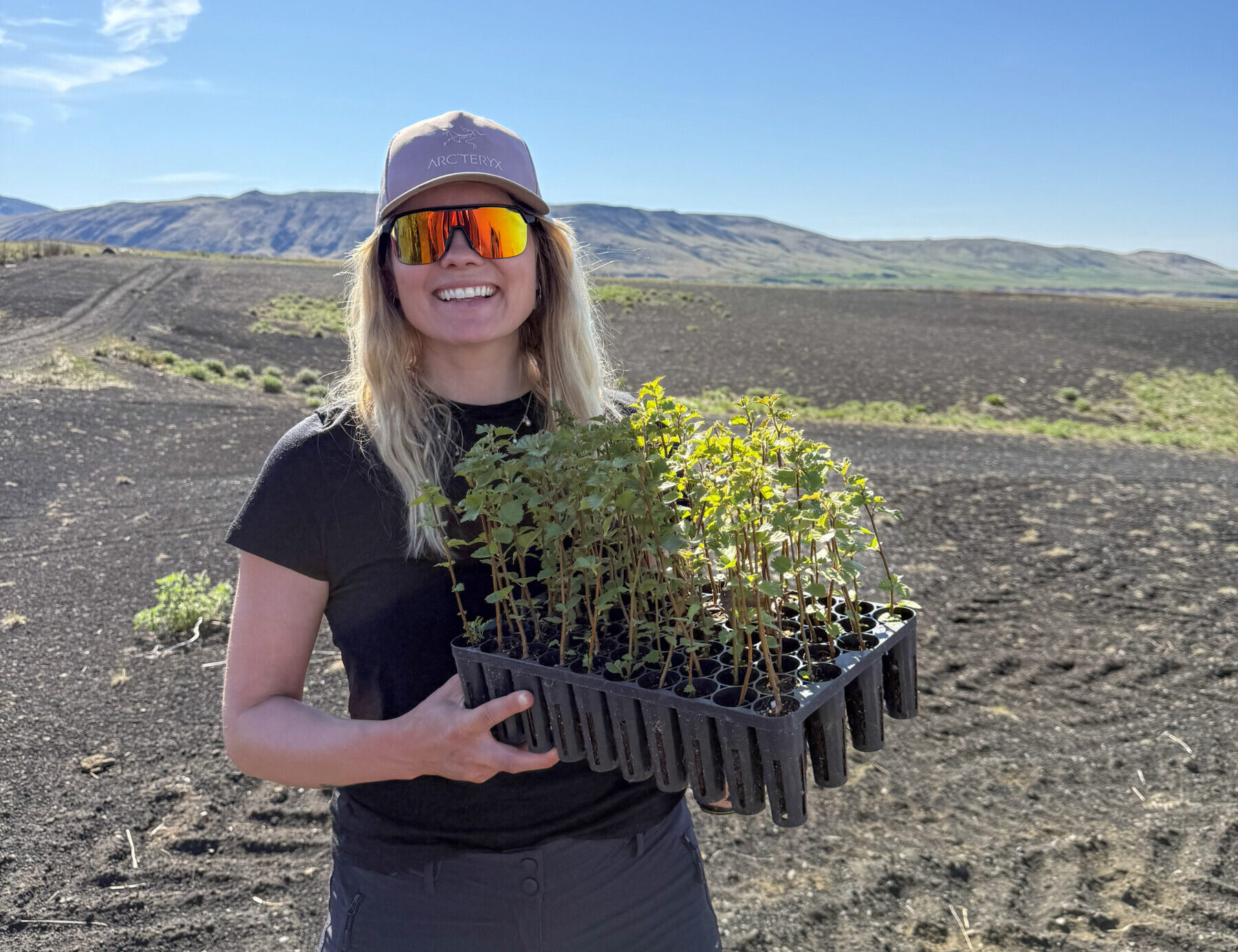
One of the key takeaways: birch trees once made up the majority of Icelands natural forests, before large parts of them disappeared over time. By the end of the day, hundreds of trees were in the ground. There was no immediate result. No visible transformation. Just small saplings placed into the soil, easy to overlook at first glance. Their impact will only become visible over time, as they slowly grow and become part of the landscape.
Looking back
Over the course of the month, sustainability did not settle into a single definition. It shows that sustainable travel in Iceland is not defined by a single action, but by consistent decisions over time. It appeared in different forms. Physical work, structural changes, creative processed, personal awareness. Some actions were visible, others more subtle. Some actions were visible, other more subtle. Some had immediate outcomes, others will only show their impact years from now. What remained consistent was the approach. Not as finished system, but as something ongoing. Shaped by people, influenced by place, and dependent on continued attention.